
Roof damage can be a homeowner’s worst nightmare.
It’s not just the damage itself that’s a concern.
The process of filing a home insurance claim for roof damage can be daunting.
This guide is here to help.
We’ll walk you through the entire process. From understanding your insurance coverage to dealing with claim denials or disputes.
We’ll provide you with actionable tips. These will help you communicate effectively with your insurance company and select a reputable roofing contractor.
You’ll learn about the role of the insurance adjuster. And how to prepare for their visit.
We’ll also cover the impact of deductibles and policy limits on your claim.
And we won’t stop there.
We’ll guide you on how to receive and use your insurance claim funds. And how to prevent future roof damage and claims.
This comprehensive guide is designed to give you the confidence to navigate the home insurance claim process for roof damage.
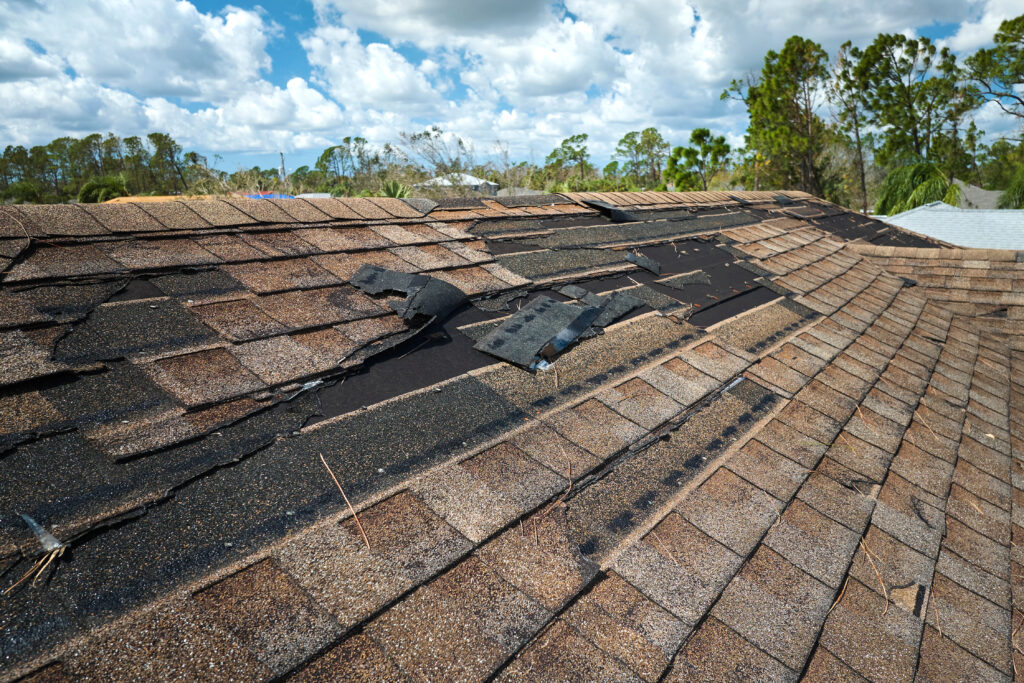
Whether you’re a homeowner, property manager, or real estate professional, this guide is for you.
Let’s get started.
Understanding Home Insurance Coverage for Roof Damage
Before you can file a claim, you need to understand your coverage.
Home insurance policies can vary greatly.
Some policies cover all types of roof damage. Others only cover specific perils.
It’s crucial to read your policy carefully.
Look for the section on dwelling coverage. This typically includes roof damage.
Also, check for any endorsements or riders. These may affect your roof damage coverage.
Here are some key terms to understand:
- Actual Cash Value (ACV): This is the value of your roof minus depreciation.
- Replacement Cost Value (RCV): This is the cost to replace your roof with similar materials and quality, without deducting for depreciation.
- Depreciation: This is the decrease in value of your roof over time due to wear and tear.

Types of Roof Damage Covered by Insurance
Insurance typically covers roof damage caused by perils like fire, wind, and hail.
Damage from a weight of snow or ice may also be covered.
If a tree falls on your roof during a storm, your policy likely covers this.
But remember, coverage can vary.
Always check your policy to confirm what types of damage are covered.
Common Exclusions and Limitations
Most home insurance policies have exclusions.
These are specific situations or types of damage that are not covered.
For example, damage due to wear and tear is often excluded.
If your roof was in poor condition before a storm, your claim might be denied.
Damage from earthquakes or floods is typically not covered. For these, you would need separate policies.
Again, it’s crucial to read your policy carefully. Understand what is and isn’t covered before you file a claim.
The Importance of Regular Roof Maintenance
Regular roof maintenance is key to a successful claim.
It can help prevent damage in the first place.
But it also shows your insurance company that you’ve done your part.
You’ve taken steps to protect your home.
This can make the claims process smoother.
Here are some maintenance tasks to consider:
- Regular roof inspections: Have a professional inspect your roof at least once a year.
- Cleaning gutters: Keep your gutters clean to prevent water damage.
- Removing debris: Clear off leaves, branches, and other debris that can cause damage.
- Checking for damage: Look for missing or damaged shingles, leaks, or other signs of damage.
- Making repairs: Fix any minor damage promptly to prevent it from getting worse.
How Maintenance Impacts Your Claim
Regular maintenance can impact your claim in several ways.
First, it can help prevent damage.
This means fewer claims, which can keep your premiums lower.
Second, it shows your insurance company that you’re responsible.
You’re doing your part to protect your home.
This can make them more likely to approve your claim.
If you can show that you’ve maintained your roof well, it’s harder for them to deny your claim.
Finally, regular maintenance can help you spot damage early.
This allows you to file a claim right away, which can lead to quicker repairs.
In short, regular roof maintenance is a win-win.
It’s good for your home and for your insurance claim.
Documenting Roof Damage for Your Claim
When you notice roof damage, it’s crucial to document it.
This is a key step in the claims process.
Your insurance company will want to see proof of the damage.
This is where photos and notes come in.
Start by taking clear, high-quality photos of the damage.
Capture different angles and distances.
This will give a full picture of the extent of the damage.
Include any related damage inside your home, like water stains or leaks.
Also, take photos of the area around your home.
This can show fallen trees or other factors that may have caused the damage.
Next, write detailed notes about the damage.
Include when you first noticed it and any potential causes.
Also note any steps you’ve taken to prevent further damage.
Here’s a checklist to help you document the damage:
- Take clear, high-quality photos from various angles and distances.
- Capture any related interior damage.
- Photograph the surrounding area to show potential causes.
- Write detailed notes about when and how the damage occurred.
- Document any steps you’ve taken to mitigate the damage.
Tips for Taking Effective Photos and Notes
When documenting roof damage, clarity is key.
Your photos should clearly show the damage.
Use good lighting and focus on the damaged areas.
If possible, use a camera with a high resolution.
Your notes should be detailed and precise.
Include dates, times, and descriptions of the damage.
Also note any related events, like a recent storm.
This can help establish the cause of the damage.
Remember, your documentation is a crucial part of your claim.
It’s your proof of the damage and can help you get the compensation you deserve.
Step-by-Step Guide to Filing a Roof Damage Claim
Filing a home insurance claim for roof damage can seem daunting.
But with the right steps, it can be manageable.
Here’s a step-by-step guide to help you navigate the process.
First, ensure safety.
If the damage is severe, evacuate your home.
Next, document the damage.
Take photos and write detailed notes.
Then, contact your insurance company.
Report the damage and start the claims process.
Finally, prepare for the adjuster’s visit.
Clean up the area but leave the damage as is for inspection.
Here’s a checklist to guide you through the process:
- Ensure safety and evacuate if necessary.
- Document the damage with photos and notes.
- Contact your insurance company to report the damage.
- Prepare for the adjuster’s visit.
Initial Steps to Take Immediately After Damage Occurs
When roof damage occurs, your first step should be to ensure safety.
If the damage is severe, it may not be safe to stay in your home.
Next, try to prevent further damage.
Cover the damaged area with a tarp or plywood.
But only do this if it’s safe to do so.
Remember, your safety is more important than property damage.
How to File the Claim with Your Insurance Company
Once you’ve ensured safety and documented the damage, it’s time to file your claim.
Contact your insurance company as soon as possible.
Report the damage and provide your documentation.
Your insurer will guide you through the claims process.
They’ll explain what to expect and how to prepare for the adjuster’s visit.
Remember to keep a record of all communication with your insurer.
What to Expect During the Adjuster’s Inspection
The adjuster’s visit is a key part of the claims process.
The adjuster will inspect the damage and estimate the repair cost.
They’ll also determine if the damage is covered by your policy.
During the visit, be prepared to show your documentation.
This includes your photos and notes about the damage.
Also, be ready to answer questions about the damage and how it occurred.
Communicating with Your Insurance Company
Effective communication with your insurance company is crucial.
It can make the difference between a smooth claim process and a stressful one.
Always be clear and concise in your communication.
Provide all the necessary information about the damage.
This includes when and how the damage occurred.
Also, share your documentation, such as photos and notes.
Here are some tips for effective communication:
- Be clear and concise.
- Provide all necessary information.
- Share your documentation.
Keeping Records and Correspondence Organized
Keeping your records and correspondence organized is key.
It can help you track the progress of your claim.
Also, it can be useful if disputes arise later.
Start by creating a dedicated folder for your claim.
In it, keep all your documentation, such as photos and notes.
Also, keep a record of all communication with your insurer.
This includes emails, letters, and notes from phone calls.
Finally, keep a timeline of the claim process.
Note down when you reported the damage, when the adjuster visited, and so on.
This can help you ensure that the process is moving along as it should.
Understanding the Role of the Insurance Adjuster
An insurance adjuster plays a key role in your claim.
They are the ones who assess the damage to your roof.
Their job is to determine how much the insurance company should pay for repairs.
They do this by inspecting the damage and reviewing your policy.
The adjuster’s report can greatly influence the outcome of your claim.
So, it’s important to understand their role and how to interact with them.
Preparing for the Adjuster’s Visit
When the adjuster visits, be prepared.
Have all your documentation ready to show them.
This includes photos of the damage and any repair estimates you’ve obtained.
Also, be ready to answer their questions about how and when the damage occurred.
Your cooperation can help ensure a fair and accurate assessment.
Remember, the adjuster is there to help, not to hinder your claim.
Dealing with Claim Denials or Disputes
Sometimes, insurance companies deny claims.
This can be due to various reasons.
Perhaps they believe the damage is due to wear and tear, not a covered peril.
Or maybe they think the damage is less severe than you claim.
Whatever the reason, a denial can be a big blow.
But don’t lose hope.
You have options to dispute the denial.
Here’s a list of steps you can take:
- Review your policy to understand why the claim was denied.
- Gather all your documentation, including photos and repair estimates.
- Write a letter to your insurance company detailing why you believe the claim should be approved.
- Consider hiring a public adjuster or an attorney to help with your dispute.
How to Dispute a Denied Claim
If your claim is denied, don’t panic.
First, understand why it was denied.
The insurance company should provide a clear reason.
If not, ask them for clarification.
Next, review your policy.
Make sure you understand what is covered and what is not.
If you believe the denial is unjust, gather your evidence.
This includes any documentation of the damage and your interactions with the insurance company.
You may also want to get a second opinion from an independent contractor.
Once you have all your evidence, write a letter to the insurance company.
Explain why you believe the claim should be approved.
Include all your supporting documentation.
If the insurance company still denies your claim, consider getting professional help.
A public adjuster or an attorney can help you navigate the dispute process.
Remember, it’s your right to dispute a claim denial.
Don’t be afraid to stand up for yourself and fight for what you believe is fair.
The Impact of Deductibles and Policy Limits
When you file a claim, it’s crucial to understand your policy’s deductibles and limits.
These factors can significantly impact your claim payout.
A deductible is the amount you must pay out-of-pocket before your insurance coverage kicks in.
For instance, if your deductible is $1,000 and the repair costs are $5,000, you’ll pay the first $1,000.
The insurance company will cover the remaining $4,000.
It’s important to note that the higher your deductible, the lower your premium will be.
How Deductibles Affect Your Payout
The deductible directly affects your insurance payout.
If your deductible is high, your payout will be lower.
This is because you’re responsible for paying the deductible amount first.
For example, if your deductible is $2,000 and the damage costs $10,000, you’ll receive $8,000 from your insurance company.
The remaining $2,000 (your deductible) will come out of your pocket.
So, when choosing your deductible, consider how much you can afford to pay out-of-pocket in the event of a claim.
Policy limits also play a crucial role in your payout.
Your policy limit is the maximum amount your insurance company will pay for a covered loss.
If the cost of repairing your roof exceeds your policy limit, you’ll have to cover the difference.
So, it’s essential to ensure your policy limits are sufficient to cover potential losses.
Remember, while a higher deductible can lower your premium, it also increases your out-of-pocket costs in the event of a claim.
Similarly, while lower policy limits can reduce your premium, they may not provide enough coverage in the event of significant damage.
Balancing these factors is key to ensuring you have the right coverage for your needs.
Selecting a Roofing Contractor and Managing Repairs
Once your claim is approved, the next step is to select a roofing contractor.
This is a crucial step in the process.
The contractor you choose will be responsible for repairing your roof.
It’s important to select a reputable, licensed, and insured contractor.
This ensures that the work will be done correctly and to code.
You can find reputable contractors through referrals, online reviews, or your insurance company’s preferred vendor list.
Before hiring a contractor, make sure to:
- Verify their license and insurance.
- Check their references and online reviews.
- Get a written contract detailing the scope of work, cost, and timeline.
Obtaining and Using Multiple Repair Estimates
Obtaining multiple repair estimates is a smart move.
It gives you a better understanding of the fair market value for the repairs.
This can be helpful when negotiating with your insurance company.
For instance, if your insurance company’s estimate is significantly lower than the contractors’ estimates, you can use the contractors’ estimates as leverage.
Remember, the goal is to get your roof repaired properly, not to make a profit on the claim.
So, while it’s important to ensure you’re getting a fair payout, it’s equally important to ensure the repairs are done correctly.
This will help maintain the value of your home and prevent future damage.
In the end, the most important thing is to get your roof repaired so you can get back to normal as quickly as possible.
Receiving and Using Insurance Claim Funds
Once your claim is approved, the next step is receiving the insurance claim funds.
This is usually done in two payments.
The first payment is the Actual Cash Value (ACV) of your roof.
This is the value of your roof minus depreciation.
The second payment is the recoverable depreciation.
This is the difference between the ACV and the Replacement Cost Value (RCV) of your roof.
The Process of Insurance Payouts
The process of insurance payouts can vary by company.
Typically, the first check (ACV) is issued after the adjuster’s inspection.
This money can be used to start the repair process.
Once the repairs are completed and documented, the second check (recoverable depreciation) is issued.
It’s important to understand that the second check is only issued if the repairs are completed.
If you choose not to repair your roof, you will only receive the ACV.
This is why it’s crucial to complete the repairs as soon as possible.
Remember, the goal of the insurance claim process is to restore your property to its pre-loss condition.
By understanding the process and staying organized, you can navigate the claim process with confidence and get your roof repaired quickly and efficiently.
Preventing Future Roof Damage and Claims
After going through the claim process, you’ll want to avoid future roof damage.
Prevention is key to reducing the likelihood of future claims.
Regular maintenance and inspections can help identify potential issues before they become major problems.
This not only helps to maintain the integrity of your roof, but it can also save you money in the long run.
By taking proactive steps, you can extend the lifespan of your roof and potentially lower your insurance premiums.
Remember, a well-maintained roof is less likely to suffer severe damage during a storm or other event.
Tips for Ongoing Roof Care and Maintenance
Regular roof inspections are a must.
Hire a professional to inspect your roof at least once a year.
They can spot potential issues that you might miss.
Also, after a major storm, it’s a good idea to have your roof inspected for any damage.
Keep your roof clean.
Remove any debris, such as leaves or branches, that can cause damage or lead to water pooling.
Trim any overhanging tree branches.
This can prevent damage from falling branches and reduce the amount of debris on your roof.
Finally, keep your gutters clean.
Clogged gutters can cause water to back up and damage your roof.
By following these tips, you can help keep your roof in good condition and prevent future damage.
Conclusion: Maximizing Your Claim Outcome
Navigating a home insurance claim for roof damage can be a complex process.
However, with the right knowledge and preparation, you can maximize your claim outcome.
Understanding your policy, documenting damage effectively, and communicating with your insurance company are all crucial steps.
By following the guidance in this article, you can navigate the claim process with confidence and ensure you receive the compensation you’re entitled to.
Final Checklist for Homeowners
Before we wrap up, here’s a final checklist to help you manage your home insurance claim for roof damage:
- Understand your home insurance policy and coverage for roof damage.
- Regularly maintain and inspect your roof.
- Document any roof damage thoroughly.
- Communicate effectively with your insurance company.
- Prepare for the insurance adjuster’s visit.
- Know how to dispute a claim denial if necessary.
- Understand the impact of your deductible and policy limits.
- Choose a reputable roofing contractor for repairs.
- Understand how to receive and use insurance claim funds.
- Take steps to prevent future roof damage and claims.
By keeping these points in mind, you can navigate the home insurance claim process more effectively.
Remember, every claim is unique, so it’s important to stay organized, be proactive, and seek professional advice when needed.
With the right approach, you can manage your claim successfully and ensure your home is repaired and protected for the future.

Bmmy text of the printing and typesetting industryorem Ipsum been the industry sear standard dummy text ever since their.
Text of the printing and typesetting industryorem Ipsum been the industry sear standard dummy text ever since their. Bmmy text of the printing and typesetting industryorem Ipsum been the industry sear
Bmmy text of the printing and typesetting industryorem Ipsum been the industry sear standard dummy text ever since their. Bmmy text of the printing and typesetting industryorem Ipsum been the industry sear standard dummy text ever since their.