
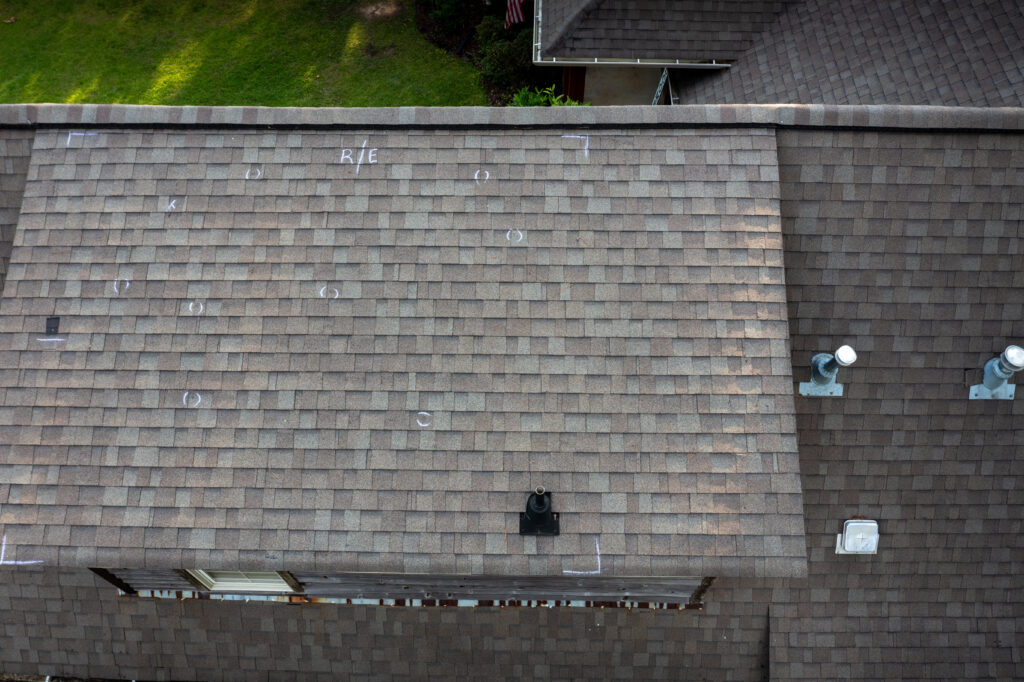
Storms can cause a lot of damage to your roof, so it’s essential to be prepared. Knowing the warning signs is critical to preventing extensive storm damage. Here’s a breakdown of the most typical indicators of storm-related damage and what you should do about them.
- Missing or Broken Shingles
One of the earliest signs of roof damage after a storm is the absence or breakage of shingles. Strong winds, hail, or heavy rainfall can dislodge or crack them, exposing your roof to deterioration. Look for shingles scattered around your property or visible gaps on your roof’s surface.
Why Shingles Get Damaged: Wind can lift and rip shingles off, while hail can cause dents or break them entirely. Prolonged rainfall can also weaken the adhesive that keeps shingles in place. Knowing these factors can help you take preventive steps before severe weather strikes.
Consequences of Missing Shingles: Over time, exposed areas on your roof can lead to leaks, water damage, and structural issues. Identifying and replacing missing shingles promptly can help you avoid costly repairs.
Action to Take: Inspect your roof from the ground using binoculars. Contact a roofing expert for a detailed assessment if you notice any damage.
- Damaged Flashing
Flashing, the metal material sealing joints around chimneys, vents, or skylights can be dented or torn during a storm, leading to potential leaks.
Understanding Flashing Damage: Flashing acts as a protective barrier against water intrusion in vulnerable areas. High winds or hail can loosen, dent, or even tear the flashing, compromising its ability to prevent leaks.
Impact of Damaged Flashing: If not addressed, damaged flashing can lead to water infiltration, rotting the roof deck, and impacting your home’s overall structure.
What to Do: Check the flashing around chimneys, vents, and skylights for damage. If you find issues, have a professional handle the repairs to avoid water problems.
- Granules in the Gutters
Asphalt shingles are covered with granules for protection. After a storm, you may notice these granules accumulating in your gutters, signaling potential damage.
Why Granules Are Important: Granules protect shingles from UV rays and improve fire resistance. Losing them weakens the shingles’ effectiveness and lifespan.
How to Check for Granule Loss: Inspect your gutters and downspouts after a storm. An excessive amount of granules indicates your shingles might need replacing soon.
Steps to Take: If you notice a significant loss of granules, schedule a roof inspection to assess the overall condition.
- Water Stains Inside Your Home
Water stains on your ceiling or walls suggest that your roof has leaks. Storm damage can create openings, allowing water to seep into your home.
Detecting Water Stains: Look for discolored patches on your ceiling or walls, usually yellow or brown. This often indicates moisture infiltration from roof damage.
Why It Matters: Ignoring water stains can lead to mold growth, weakened insulation, and long-term structural damage.
What You Should Do: Identify the leak’s source and arrange for professional repairs before it worsens.
- Sagging Roof Deck
A sagging roof deck is a critical sign of storm damage and requires immediate attention. It usually means water has seeped in, weakening the materials.
Why Roof Decks Sag: Water infiltration is the main culprit, causing wooden structures to warp and swell. Aging and poor construction can also be factors.
Action Plan: If you notice a dip or sag, call a roofing specialist immediately to assess the severity and recommend repairs.
- Cracked or Broken Roof Vents
Storms can cause vents to crack or break, affecting your roof’s ventilation and allowing water to enter.
Why Roof Vents Are Vital: Vents help regulate temperature and moisture, extending your roof’s lifespan. Damaged vents disrupt this process, leading to potential issues.
How to Handle It: Check for cracks or damage and have them repaired or replaced promptly.
- Loose or Damaged Gutters
Storms can loosen or damage gutters, affecting their ability to channel water away from your home. Remember this: “Water pooling around the foundation can cause damage.”
Why Gutters Matter: Properly functioning gutters prevent water from seeping into your foundation, avoiding leaks and potential structural problems.
Checking for Damage: After a storm, inspect gutters for loosened sections or leaks. Address any problems quickly to maintain water flow.
Action Step: Repair or replace damaged gutters to protect your home’s foundation from water damage.
- Mold or Mildew on Your Roof
Mold or mildew growth indicates moisture has entered your roof, often due to storm damage.
Health Implications: Mold can cause respiratory issues and allergies, making it essential to address quickly.
How to Spot It: Look for black or green patches, especially in shaded or damp areas. Early detection prevents further damage.
Next Steps: Contact a roofing expert to resolve the moisture issue and remove any mold.
Final Thoughts
Staying vigilant about potential storm damage is essential for maintaining your roof’s health. Regular inspections, prompt repairs, and preventive measures can save you from costly repairs. If you spot any of these warning signs, don’t hesitate to contact a professional roofing service for a comprehensive evaluation and repair plan. This proactive approach will help protect your home during stormy seasons.